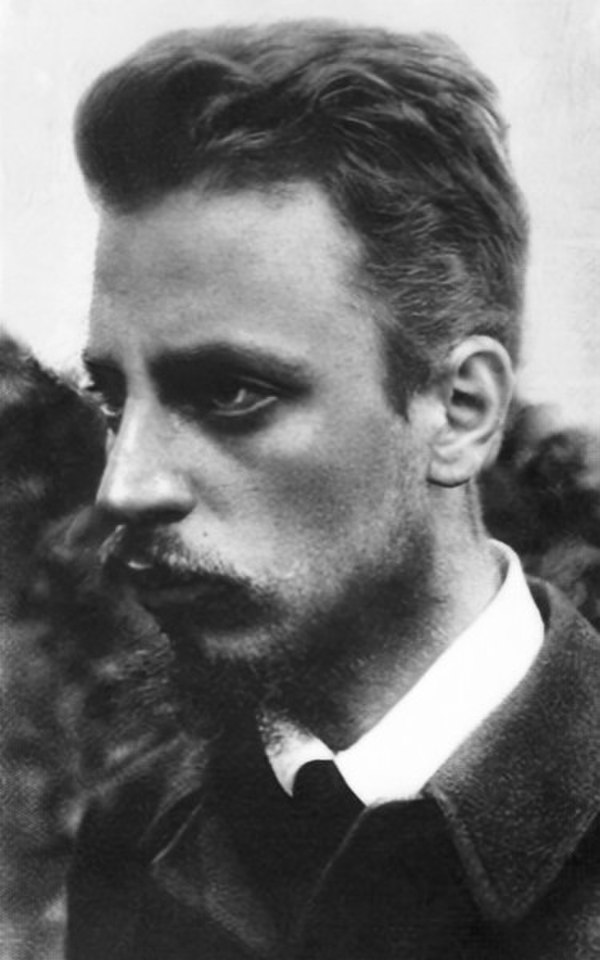
Giving Birth to Our Inner Visions
Rainer Maria Rilke's poignant assertion, "You must give birth to your images. They are the future waiting to be born," invites us to recognize the profound responsibility we hold in manifesting our inner visions. This quote speaks to the essence of creativity as a sacred act, urging us to nurture and bring forth the ideas and dreams that reside within us. The stakes are high; in a world often dominated by external expectations and distractions, the act of giving birth to our authentic images becomes a vital expression of our true selves and a contribution to the collective future.
In this light, Rilke's words resonate deeply with the human experience of creation and transformation. The imagery of birth evokes a sense of urgency and necessity, suggesting that our inner visions are not merely whimsical thoughts but essential elements of our existence. To ignore this call is to deny a part of ourselves that longs to emerge and engage with the world. Thus, the act of creation is not only a personal endeavor but a communal one, as our unique contributions shape the future landscape of human experience.
The image / the metaphor
At first glance, Rilke's quote presents a vivid metaphor of birth, encapsulating the dynamic process of creation. The choice of the verb "give birth" implies an active, almost laborious engagement with our inner images, suggesting that they require care, attention, and effort to manifest. The phrase "waiting to be born" imbues these images with a sense of urgency and potential, as if they exist in a liminal space, eager to enter the world yet reliant on our willingness to facilitate their emergence.
Diving deeper into this metaphor, we can see that the act of giving birth to our images is akin to a spiritual awakening. Just as a mother nurtures her child during pregnancy, we must cultivate our ideas, allowing them to grow and develop within us. This nurturing process often involves grappling with fear, doubt, and societal pressures, yet it is through this struggle that we refine our visions. Rilke's metaphor thus serves as a reminder that creativity is not a passive endeavor; it is an active, sometimes tumultuous journey toward self-realization and expression.
In the speaker's tradition
Rainer Maria Rilke's insights are deeply rooted in the tradition of mysticism, where the act of creation is often seen as a sacred expression of the divine. Concepts such as dharma, which refers to one's duty or path in life, resonate with Rilke's call to give birth to our images. In this context, our creative expressions can be viewed as manifestations of our unique purpose, contributing to the greater tapestry of existence. The idea of kenosis, or self-emptying, also parallels Rilke's message; by surrendering to the creative process, we allow our authentic selves to emerge, free from the constraints of ego and expectation.
Rilke's thoughts echo the sentiments found in various mystical texts, such as the writings of the Sufi poet Rumi, who similarly emphasizes the importance of inner exploration and the unfolding of one's true nature. In Rumi's poetry, the act of creation is often depicted as a divine dance, where the soul engages with the universe in a playful yet profound manner. This shared understanding across mystical traditions highlights the universal nature of Rilke's message: that our inner images are not only personal but also interconnected with the larger cosmic narrative.
Living the teaching
Consider a modern scenario where this teaching resonates: an artist grappling with self-doubt as they attempt to create a new piece. The pressure to conform to market trends or societal expectations can stifle their creativity, leading to a sense of paralysis. Yet, if they embrace Rilke's call to give birth to their images, they may find the courage to explore their unique voice, allowing their authentic expression to emerge. This process of creation becomes a transformative journey, where the artist not only produces a work of art but also discovers deeper aspects of themselves in the process.
In a different context, imagine a relationship where one partner feels stifled, unable to express their true feelings or desires. By embodying Rilke's teaching, they might find the strength to communicate openly, giving birth to their emotions and needs. This act of vulnerability can lead to a deeper connection, fostering understanding and intimacy between partners. In both scenarios, the act of giving birth to one's images becomes a powerful catalyst for personal growth and relational harmony, illustrating the profound impact of embracing our creative potential.
A reflection
As we contemplate Rilke's profound words, we are invited to reflect on our own creative journeys. What images or visions reside within you, waiting to be born? Consider the barriers that may be preventing their emergence and the ways in which you can nurture these inner creations. In this moment of reflection, allow yourself to embrace the transformative power of creativity, recognizing it as a vital expression of your authentic self and a contribution to the unfolding future.
Join the BrightStar Community
Stay connected with daily inspiration, event announcements, and community wisdom