The Devotion of the Heart: Embracing the Beloved
Hafiz's poignant assertion, "The lover has no other faith but the Friend," encapsulates the essence of devotion in the Sufi tradition. This statement invites us to consider the depth of love and faith that transcends conventional beliefs, suggesting that true devotion is not merely an act of worship but a profound relationship with the Divine. In a world often filled with distractions and competing ideologies, this quote serves as a reminder of the singular focus that love demands, urging us to cultivate a heart that is wholly devoted to the Beloved.
Delving deeper, we find that this quote speaks to the transformative power of love, which can lead to a state of spiritual awakening. The "Friend" in Hafiz's words represents not just a personal deity but the very essence of love itself, a force that binds us to the universe and to each other. This idea challenges us to reflect on our own relationships and the ways in which they can serve as pathways to greater understanding and connection with the Divine. In this light, Hafiz's words resonate with the timeless quest for unity and belonging that lies at the heart of human experience.
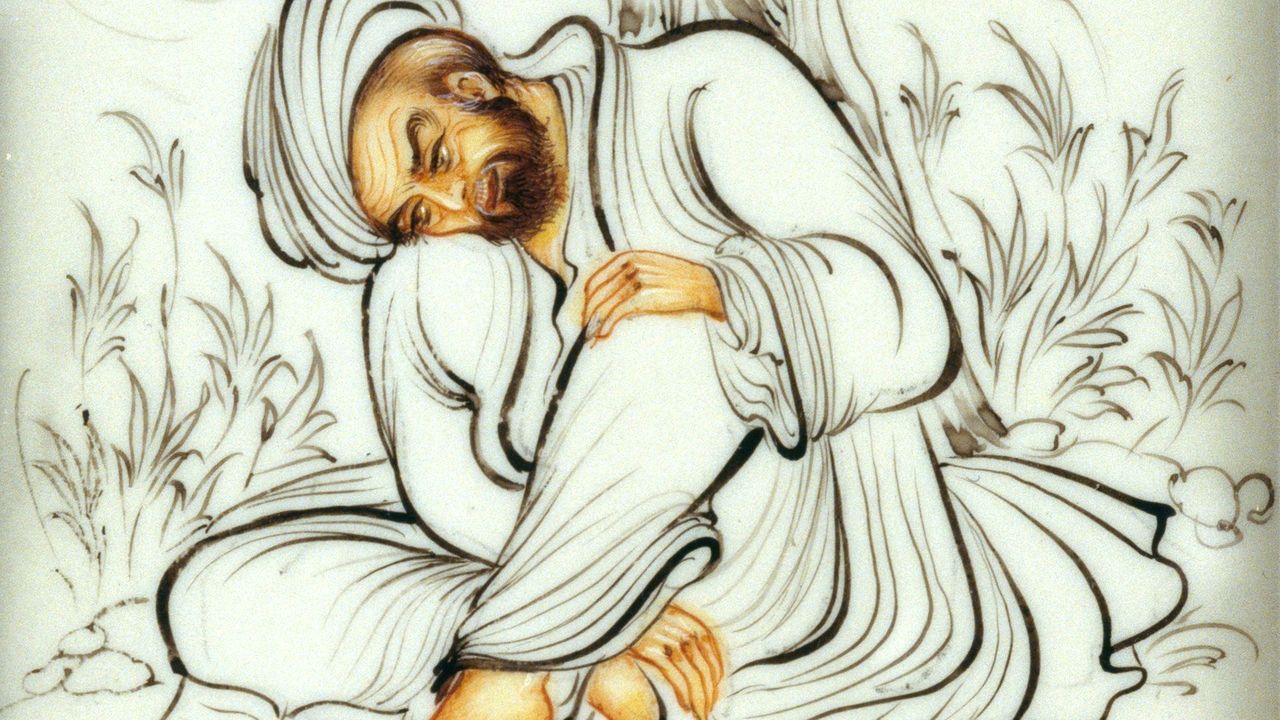
The image / the metaphor
At first glance, the imagery in Hafiz's quote evokes a sense of intimacy and devotion. The term "lover" suggests a deep emotional connection, while "the Friend" implies a relationship built on trust and mutual understanding. The choice of the word "faith" indicates that this connection is not merely intellectual but is rooted in a profound, lived experience. The verbs chosen here—"has" and "faith"—convey a sense of possession and commitment, illustrating that the lover's entire being is intertwined with the essence of the Friend.
Going deeper, we can interpret the metaphor of the "lover" and "Friend" as a representation of the soul's journey toward union with the Divine. In Sufism, this relationship is often characterized by the concept of "fana," or the annihilation of the self in the presence of the Beloved. The lover's faith, therefore, is not a passive belief but an active engagement with the Divine, a surrendering of the ego that allows for a deeper connection. This metaphor invites us to explore our own relationships with the Divine and to consider how they shape our understanding of faith and devotion.
In the speaker's tradition
Hafiz's quote is deeply rooted in the Sufi tradition, which emphasizes the importance of love and devotion as pathways to spiritual enlightenment. Concepts such as "bhakti," or loving devotion, resonate with the idea that true faith arises from a heartfelt connection to the Divine. In Sufism, this relationship is often described as a dance between the lover and the Beloved, where the lover's journey is marked by longing, surrender, and ultimately, union. This perspective aligns with the broader spiritual understanding that love is the highest form of knowledge, transcending intellectual comprehension.
In the context of Sufi literature, Hafiz's sentiment echoes the teachings of Rumi, who similarly emphasized the transformative power of love. In Rumi's poetry, the beloved is often depicted as a source of divine inspiration, guiding the seeker toward a deeper understanding of the self and the universe. This shared emphasis on love as a central tenet of spiritual practice highlights the continuity of thought within the Sufi tradition, inviting us to explore our own experiences of love and devotion as pathways to the Divine.
Living the teaching
In our modern lives, the teaching encapsulated in Hafiz's quote can manifest in various ways. Consider a scenario where an individual is navigating a challenging relationship, perhaps with a partner or a close friend. By embracing the idea that "the lover has no other faith but the Friend," one might approach the relationship with a renewed sense of commitment and understanding. This perspective encourages us to see the other person not merely as a companion but as a reflection of the Divine, prompting us to cultivate patience, compassion, and a deeper connection.
Another application of this teaching can be found in the practice of mindfulness and presence. In moments of difficulty or uncertainty, we can remind ourselves to focus on the essence of love that underlies our experiences. By anchoring ourselves in the belief that our faith is rooted in our connection to the Beloved, we can navigate life's challenges with grace and resilience. This practice invites us to cultivate a heart that is open and receptive, allowing love to guide our actions and decisions in both our personal and communal lives.
A reflection
As we contemplate Hafiz's profound statement, we are invited to reflect on the nature of our own faith and devotion. What does it mean for us to have "no other faith but the Friend"? In what ways can we deepen our relationships—both with the Divine and with those around us—so that love becomes the guiding force in our lives? This contemplation encourages us to explore the transformative power of love and to consider how it shapes our understanding of faith, connection, and ultimately, our journey toward spiritual fulfillment.