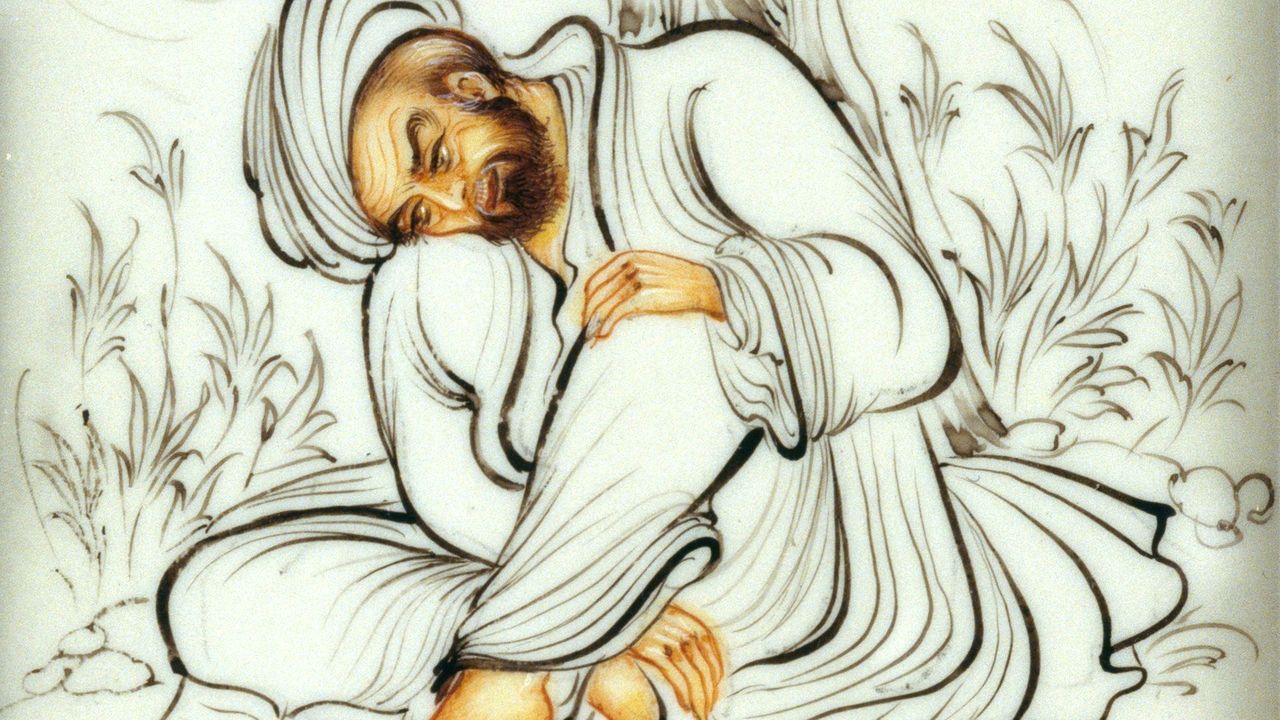
The Unadorned Essence of Beauty
Hafiz's assertion that "The Friend's beauty needs no ornament" invites us to contemplate the intrinsic nature of beauty, suggesting that true beauty exists independently of external embellishments. This notion challenges our contemporary obsession with superficiality and the adornments that often accompany our understanding of beauty. In a world that frequently equates worth with appearance, Hafiz's words remind us to seek the essence of beauty that lies beneath the surface, urging us to recognize and celebrate the unadulterated qualities of the beloved.
Delving deeper, we find that Hafiz's quote speaks not only to the nature of beauty but also to the relationship between the seeker and the divine. The "Friend" in this context can be interpreted as a metaphor for the divine presence, a beloved that transcends the limitations of form and appearance. This perspective invites us to explore the profound connection between beauty and authenticity, suggesting that the most profound experiences of beauty arise from a place of sincerity and truth, unencumbered by the need for external validation.
The image / the metaphor
At its core, the imagery in Hafiz's quote evokes a sense of purity and simplicity. The term "beauty" conjures visions of grace and allure, while "ornament" implies the addition of superficial elements that may distract from the essence of what is being observed. The choice of words suggests a contrast between the inherent beauty of the Friend and the unnecessary embellishments that society often imposes. This dichotomy invites us to reflect on our own perceptions of beauty and the ways in which we may inadvertently complicate our understanding of it.
Going deeper into the metaphor, we can see that Hafiz is not merely speaking of physical beauty but rather the beauty of the soul, the divine essence that resides within each of us. This beauty is untainted by societal expectations or material concerns; it is a reflection of our true selves, untouched by the need for approval or adornment. In this light, the quote serves as a reminder that the most profound beauty is often found in simplicity and authenticity, encouraging us to strip away the layers of pretense and connect with the essence of who we are and who we love.
In the speaker's tradition
Hafiz's perspective on beauty resonates deeply within the Sufi tradition, which emphasizes the importance of inner transformation and the pursuit of divine love. Concepts such as "fana," or the annihilation of the self in the presence of the divine, echo the sentiment that true beauty lies beyond the superficial. In Sufism, the journey toward understanding beauty is often intertwined with the practice of love and devotion, where the seeker learns to see beyond the physical realm and into the heart of existence itself.
Moreover, the idea of beauty as an unadorned essence can be paralleled with the Buddhist concept of "sunyata," or emptiness, which teaches that true understanding arises when we let go of attachments and preconceived notions. Just as Hafiz invites us to recognize the inherent beauty in the Friend without the need for ornamentation, so too does the Buddhist path encourage us to perceive reality without the distortions of our desires and fears. In both traditions, the essence of beauty is found in the purity of experience, unclouded by the distractions of the material world.
Living the teaching
In our modern lives, the teaching of Hafiz can manifest in various ways. Consider a scenario where an individual feels pressured to present themselves in a certain way to gain acceptance or admiration from others. This desire for external validation can lead to a disconnection from one's true self, obscuring the beauty that lies within. By embracing the idea that one's worth is not contingent upon outward appearances or societal expectations, individuals can cultivate a deeper sense of self-acceptance and authenticity, allowing their inner beauty to shine through.
Another application of this teaching can be found in relationships, where the temptation to embellish or alter one's true self can create barriers to genuine connection. When we approach our relationships with the understanding that true beauty needs no ornament, we open ourselves to vulnerability and honesty. This shift allows for deeper intimacy, as we learn to appreciate each other for who we truly are, rather than who we feel we need to be. In this way, Hafiz's wisdom encourages us to foster connections that celebrate authenticity, leading to richer and more meaningful relationships.
A reflection
As we contemplate Hafiz's profound assertion, we are invited to reflect on our own perceptions of beauty and the ways in which we may seek to adorn or embellish our lives. What would it mean to embrace the beauty of our true selves, unencumbered by the need for external validation? In what areas of our lives can we strip away the ornaments and allow our essence to shine? These questions serve as a guiding light, encouraging us to explore the depths of our being and to recognize the beauty that exists within and around us.