The Silence of Love: A Journey Beyond Philosophy
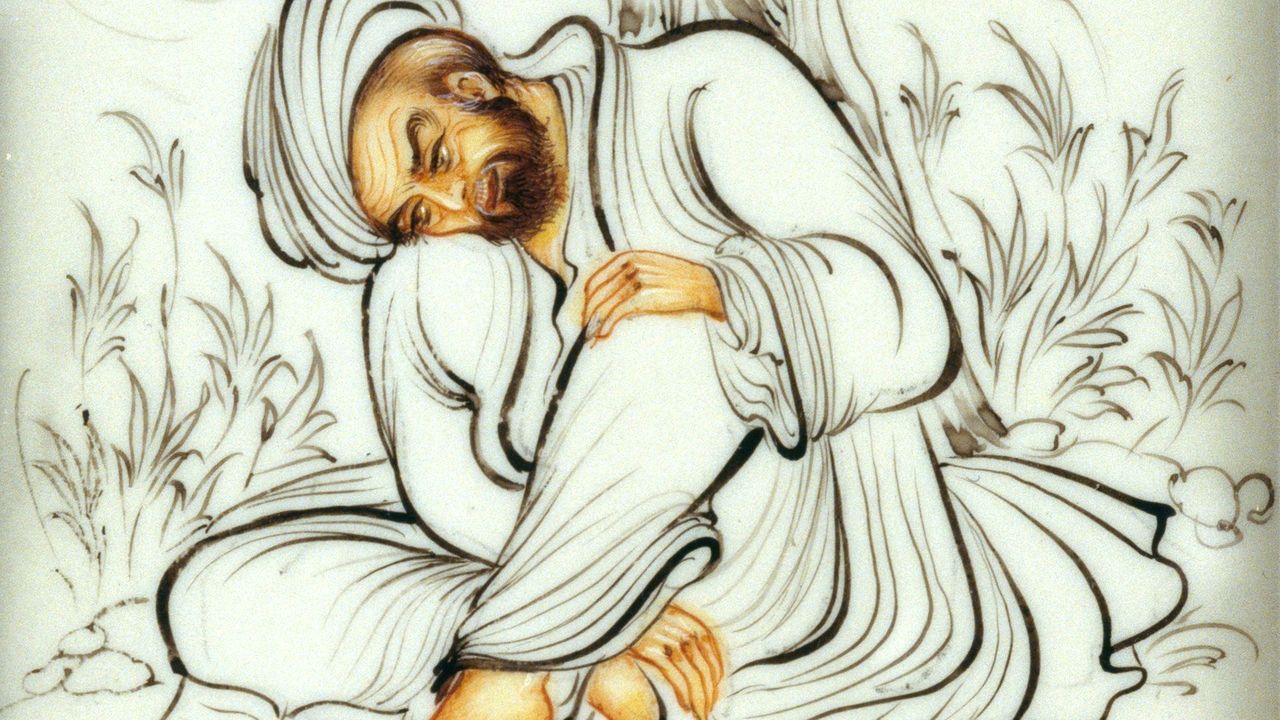
In the evocative words of Hafiz, "when love speaks, the philosopher falls silent." This profound statement invites us to consider the limitations of intellectual discourse when faced with the ineffable nature of love. It suggests that love transcends the confines of rational thought, urging us to embrace a deeper, more intuitive understanding of existence. In a world often dominated by analysis and reason, this quote serves as a gentle reminder of the power of love to silence our incessant questioning and to guide us toward a more profound truth.
Hafiz, a luminary of Sufi poetry, invites us to explore the intersection of love and silence, where the heart speaks in ways that the mind cannot comprehend. This quote resonates deeply in our contemporary lives, where the cacophony of opinions and philosophies often drowns out the subtle whispers of love. It challenges us to reflect on moments when we have been so captivated by love that our usual patterns of thought and debate fell away, leaving us in a state of pure presence. In this space, we may discover that love is not merely an emotion but a transformative force that reshapes our understanding of reality.
The image / the metaphor
At first glance, the imagery in Hafiz's quote evokes a striking contrast between love and philosophy. The act of love speaking suggests a voice that is both powerful and tender, capable of conveying truths that elude rational explanation. The philosopher, often associated with reason and discourse, is depicted as falling silent, highlighting the inadequacy of intellectual frameworks to encapsulate the depth of love's experience. This silence is not one of defeat but rather a recognition of the limitations of language and thought in the face of something as profound as love.
Diving deeper into the metaphor, we can see that love is portrayed as a living entity, a force that commands attention and reverence. The philosopher's silence symbolizes a surrender to this force, an acknowledgment that some truths are best understood through experience rather than analysis. In this way, Hafiz invites us to embrace the paradox of love: it is both a personal experience and a universal truth that transcends individual understanding. The silence that follows love's proclamation is an invitation to listen, to feel, and to be present in the moment, allowing love to guide us beyond the confines of our intellect.
In the speaker's tradition
Hafiz's wisdom is deeply rooted in the Sufi tradition, which emphasizes the transformative power of love as a pathway to divine union. Central to Sufism is the concept of *fana*, or annihilation of the self, which occurs when one is fully immersed in love. In this state, the distinctions between the lover and the beloved dissolve, leading to a profound experience of unity. This aligns with the idea that love, in its purest form, transcends the dualities that philosophy often seeks to dissect, inviting us into a realm of direct experience and connection.
Moreover, the notion of *kenosis*, or self-emptying, resonates with Hafiz's assertion. Just as the philosopher must relinquish their intellectual posturing to fully embrace love, so too must we let go of our ego-driven desires for understanding and control. In the *Divan*, Hafiz often explores themes of surrender and devotion, illustrating how love can lead us to a deeper understanding of ourselves and the universe. This surrender is not a loss but a gain, as it opens us to the mysteries of existence that lie beyond the reach of reason.
Living the teaching
Consider a modern scenario where this teaching might resonate: a heated debate among friends about the nature of love and relationships. Each person presents their philosophical arguments, citing studies and theories, yet amidst the clamor, a moment of vulnerability arises. One friend shares a personal story of love's transformative power, and suddenly, the room falls silent. In that silence, the intellectual discourse fades, and the raw, authentic experience of love takes center stage. This moment illustrates how love can transcend our need for rationality, inviting us to connect on a deeper emotional level.
A reflection
As we contemplate Hafiz's profound insight, we are invited to reflect on our own experiences with love and silence. In what moments have you felt the pull of love so deeply that it rendered your thoughts and arguments irrelevant? How might embracing silence in the presence of love open new pathways for understanding and connection in your life? Allow this question to linger in your heart, guiding you toward a deeper exploration of the relationship between love and the silence that follows.