Embracing the Essence of Love
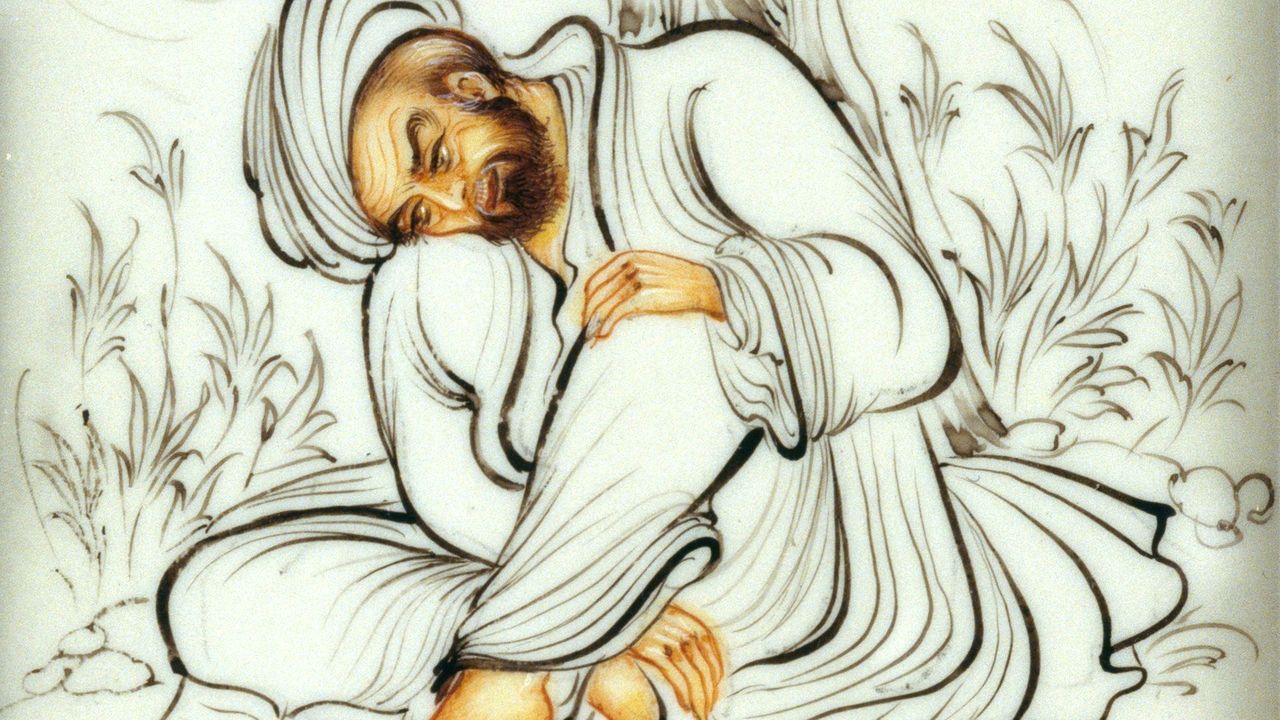
Hafiz, the beloved Persian poet, offers us a profound invitation with his assertion that "All the books are footnotes to one verse: be the Beloved's." This statement encapsulates the essence of spiritual pursuit, suggesting that all knowledge, all texts, ultimately serve to guide us toward a singular truth: the call to embody love and devotion. In a world overflowing with information and distractions, this quote reminds us of the simplicity and profundity of love as the ultimate goal of our existence.
At its core, this quote challenges us to reconsider the purpose of our intellectual endeavors and spiritual practices. It urges us to move beyond mere accumulation of knowledge and instead focus on the transformative power of love. By positioning ourselves as the Beloved's, we are invited to cultivate a relationship with the divine that transcends the confines of written words, leading us to a deeper understanding of our own essence and interconnectedness with all beings.
The image / the metaphor
Hafiz's metaphor of books as footnotes evokes a vivid image of a vast library, filled with countless volumes that seek to explain the complexities of life, love, and spirituality. The choice of the word "footnotes" suggests that while these texts may offer valuable insights, they are ultimately secondary to the primary verse—the call to be the Beloved's. This imagery invites us to consider the weight of our intellectual pursuits and the necessity of grounding them in the lived experience of love.
Diving deeper into this metaphor, we can see that the act of being the Beloved's implies a surrender to a greater force, a divine love that transcends the limitations of language. It speaks to the idea that true understanding cannot be fully captured in words; rather, it is found in the heart's capacity to love and be loved. The essence of our existence, according to Hafiz, lies not in the accumulation of knowledge but in the embodiment of love, which serves as the ultimate expression of our spiritual journey.
In the speaker's tradition
Hafiz's teachings are deeply rooted in Sufism, a mystical branch of Islam that emphasizes the pursuit of divine love and the inner experience of God. Central to Sufi thought is the concept of *fana*, or the annihilation of the self in the presence of the Beloved. This notion resonates with Hafiz's call to be the Beloved's, as it encourages us to dissolve our ego and merge with the divine essence of love. In this way, Hafiz aligns himself with the Sufi tradition that sees love as the ultimate path to spiritual realization.
Moreover, the idea of love as the guiding principle can be found in the works of other Sufi poets, such as Rumi, who famously stated, "The wound is the place where the Light enters you." This connection highlights the transformative power of love, suggesting that our struggles and challenges serve as catalysts for deeper understanding and connection with the divine. By embracing our role as the Beloved's, we open ourselves to the possibility of profound spiritual awakening, transcending the limitations of our individual selves.
Living the teaching
In our modern lives, the teaching of being the Beloved's can manifest in various ways. Consider a scenario where one is faced with a challenging relationship, perhaps with a colleague or a family member. Instead of approaching the situation with defensiveness or resentment, one might choose to embody love and compassion, recognizing that each interaction is an opportunity to express the essence of being the Beloved's. This shift in perspective not only transforms the dynamics of the relationship but also fosters a deeper sense of connection and understanding.
Another application of this teaching can be found in daily practices such as meditation or mindfulness. By dedicating moments of our day to simply being present and cultivating love within ourselves, we align with Hafiz's call. For instance, during a quiet moment of reflection, one might focus on the intention to embody love in all actions, allowing this intention to guide decisions and interactions throughout the day. In this way, the practice of being the Beloved's becomes a living, breathing reality that shapes our experience of the world.
A reflection
As we contemplate Hafiz's profound invitation to "be the Beloved's," we are left with a contemplative question: How can I embody love in my daily life, transcending the distractions of knowledge and ego? This inquiry invites us to explore the ways in which we can align our actions and intentions with the essence of love, allowing it to guide our interactions and deepen our connections with ourselves and others. In this exploration, we may find that the path to spiritual fulfillment lies not in the accumulation of wisdom, but in the heartfelt expression of love.