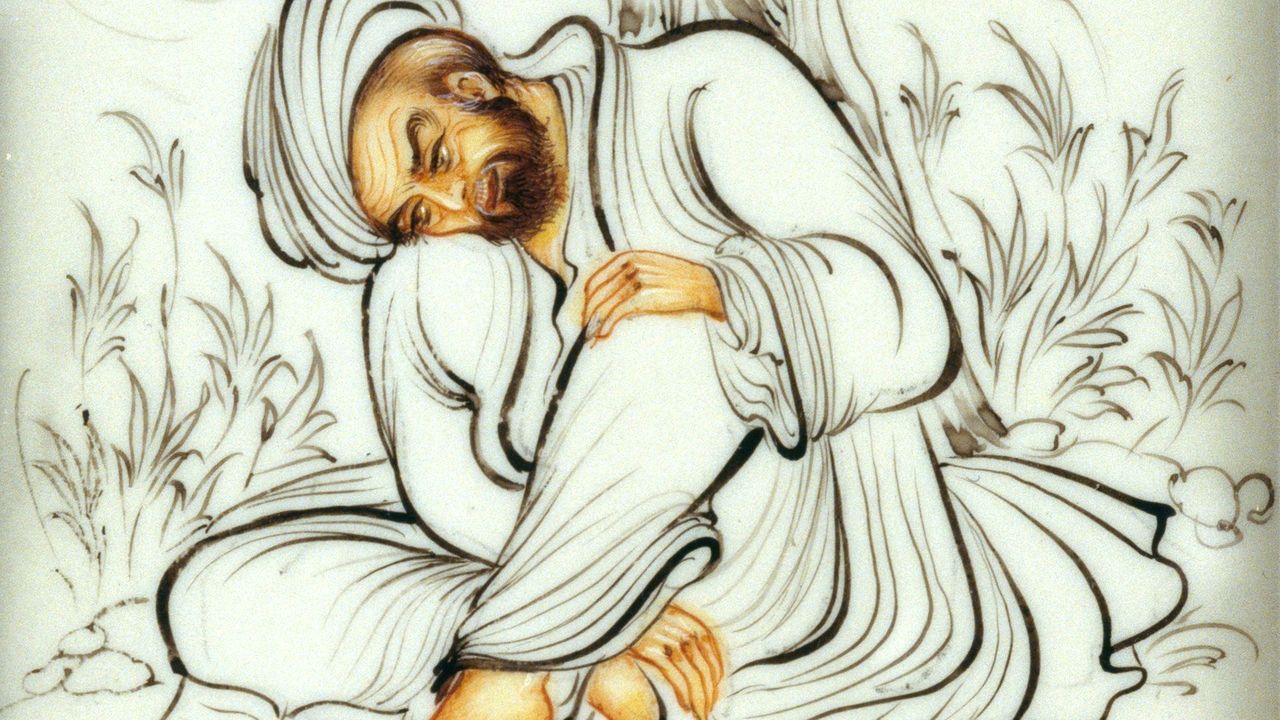
Glimpses Beyond the Veil: Wisdom at the Threshold
Hafiz invites us to contemplate the profound wisdom that lies just beyond the threshold of our everyday experiences. His assertion, "Sit at the threshold of the wine-house and you will see what the wise have not seen," beckons us to pause and observe the world with a fresh perspective. In this simple yet evocative imagery, he suggests that true insight often resides not in the depths of intellectual pursuit but in the quiet observation of life as it unfolds. This invitation to stillness and presence is particularly relevant in our fast-paced world, where the noise of daily life can drown out the subtler whispers of wisdom.
To sit at the threshold is to occupy a liminal space, a place of transition and potential. It is here that we can witness the interplay of the seen and the unseen, the known and the unknown. This threshold represents a boundary where the ordinary meets the extraordinary, where the mundane can transform into the miraculous. Hafiz's words remind us that wisdom is not solely the domain of the learned; rather, it is accessible to anyone willing to pause, observe, and engage with the world around them. In this way, the quote serves as both a challenge and an invitation to cultivate a deeper awareness of our surroundings.
The image / the metaphor
The imagery of the "threshold of the wine-house" conjures a vivid scene, rich with sensory details. The wine-house, a place of celebration and intoxication, symbolizes the joy and ecstasy that can be found in life. By choosing to sit at the threshold, one is not fully immersed in the revelry but rather positioned to observe the unfolding events with clarity and detachment. The act of sitting suggests a willingness to be present, to engage with the moment without the need to rush in or escape. This careful positioning allows for a unique vantage point, where one can witness the dance of life without being swept away by its currents.
Delving deeper into the metaphor, the threshold itself becomes a powerful symbol of potentiality. It is a space that invites contemplation and reflection, a boundary that separates the known from the unknown. In Sufi thought, thresholds often represent the journey of the soul, moving from one state of being to another. By sitting at this threshold, we are encouraged to embrace uncertainty and to be open to the insights that arise from stillness. This metaphor serves as a reminder that wisdom is not always found in the depths of knowledge but often in the quiet moments of observation and reflection.
In the speaker's tradition
Hafiz's wisdom is deeply rooted in the Sufi tradition, which emphasizes the importance of inner experience and the pursuit of divine love. Central to Sufism is the concept of fana, or the annihilation of the self, which allows for a deeper connection with the divine. By sitting at the threshold, one may experience a moment of fana, where the boundaries of the self dissolve, and a greater understanding of the universe emerges. This aligns with the Sufi practice of dhikr, or remembrance, where the practitioner seeks to cultivate awareness of the divine presence in every moment.
In the context of Hafiz's work, we can draw parallels to the teachings found in the Masnavi by Rumi, another luminary of Sufism. Rumi often speaks of the importance of love and the transformative power of witnessing the beauty of existence. Both poets encourage us to embrace the present moment and to find wisdom in the simplicity of being. The act of sitting at the threshold, therefore, becomes a spiritual practice that invites us to engage with the world in a way that transcends mere observation, allowing us to connect with the deeper truths that lie beneath the surface.
Living the teaching
Consider a modern scenario where this teaching might resonate: a busy professional navigating the demands of work and life. In the midst of deadlines and responsibilities, one might find it challenging to pause and reflect. However, by intentionally creating moments of stillness—perhaps during a lunch break or a quiet evening at home—this individual can embody Hafiz's invitation. By sitting at the metaphorical threshold of their busy life, they can observe their thoughts and feelings without judgment, gaining insights that may have previously eluded them in the chaos of daily existence.
Another application of this teaching can be found in interpersonal relationships. Imagine a moment of conflict with a loved one, where emotions run high, and communication breaks down. By choosing to sit at the threshold of that emotional turmoil—taking a step back to breathe and reflect—one can gain clarity and perspective. This practice of observation allows for a deeper understanding of the dynamics at play, fostering compassion and empathy. In this way, Hafiz's wisdom becomes a guiding light, illuminating the path toward deeper connection and understanding in our relationships.
A reflection
As we contemplate Hafiz's invitation to sit at the threshold, we are called to consider our own lives and the moments we rush through without truly seeing. What insights might we uncover if we paused to observe the world around us with fresh eyes? In this spirit, I invite you to reflect on this question: What does it mean for you to sit at the threshold of your own experiences, and how might this practice transform your understanding of wisdom and presence?



Join the BrightStar Community
Stay connected with daily inspiration, event announcements, and community wisdom